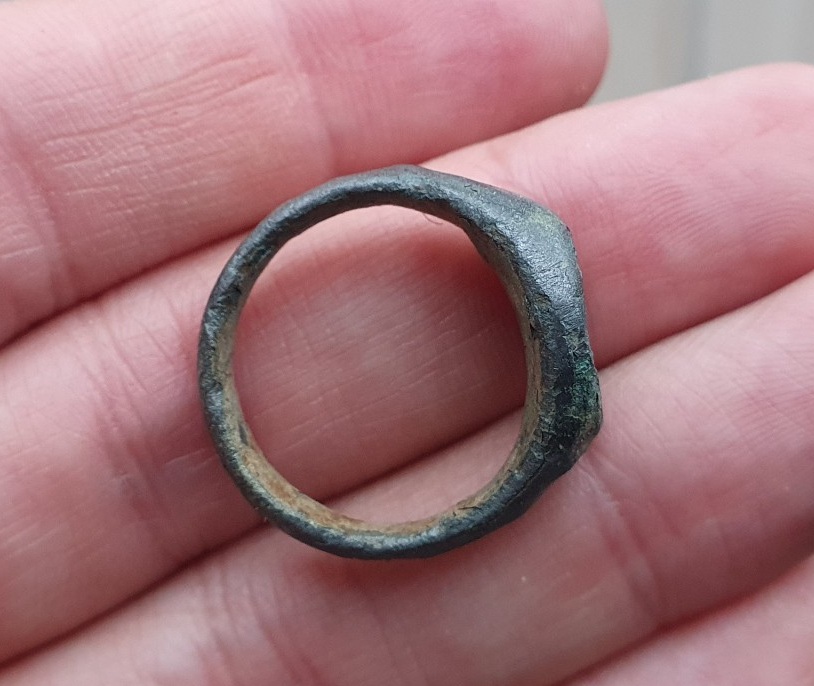
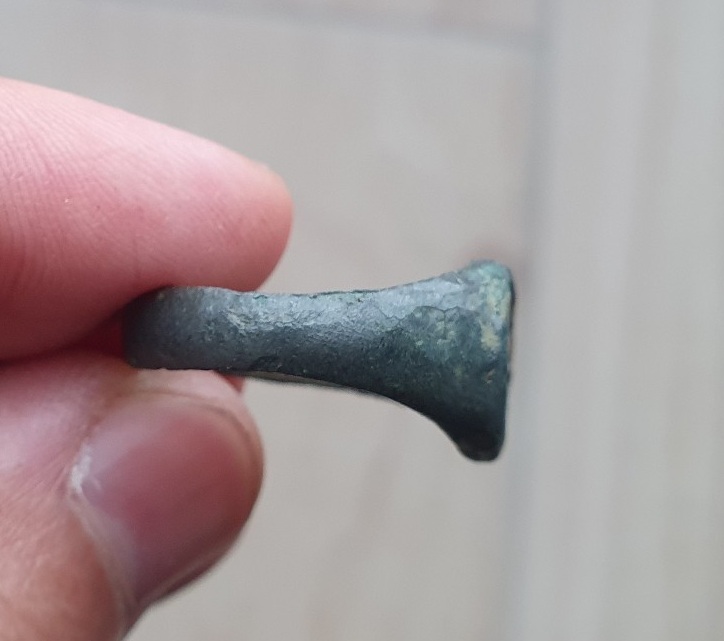
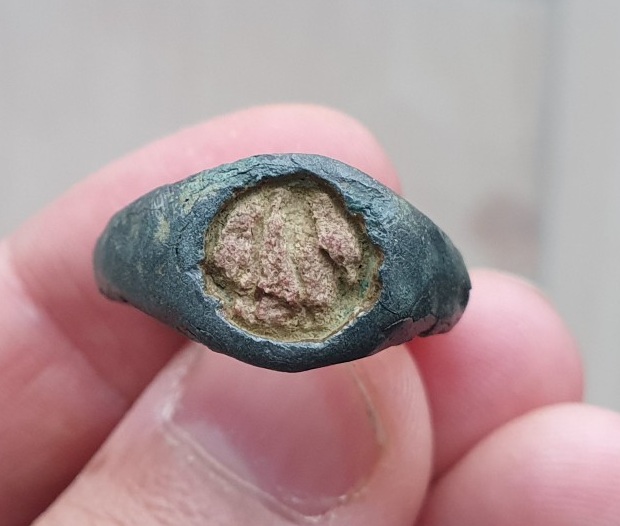
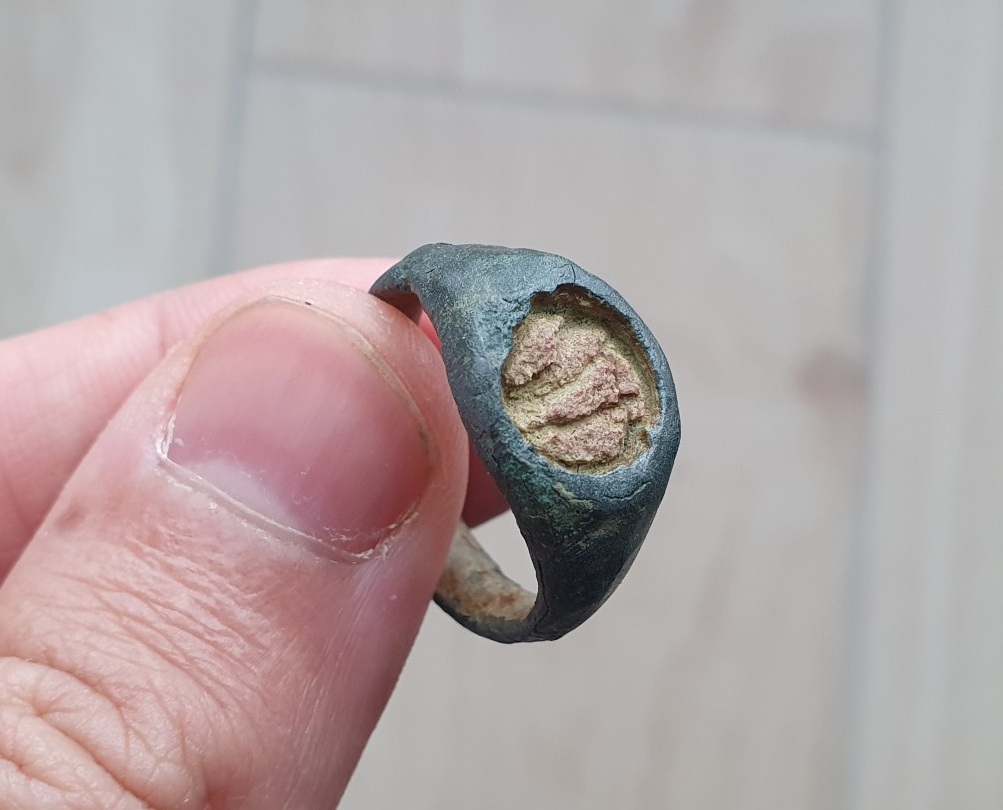
Brass intaglio ring
- Date of discovery: 2025-11-01
- Aproximate location of discovery: Neerlanden, Vlaanderen
- Context: Fragments of terra sigillata, roman coinage
- Weight: 7.04 g
- Size: Ring 24x5x2 mm (D/W/T), Intaglio 9mm D
This copper-alloy ring, likely made of brass, dates to the 1st – 2nd century AD and is probably of Roman origin. It was found in the context of a Roman road. The ring once held a red glass-paste intaglio, an inset gem-like seal now partially degraded. Rings of this kind were common personal ornaments in the Roman world. They served both decorative and functional purposes: as markers of identity, symbols of social status, or practical signet rings used to seal documents in wax.
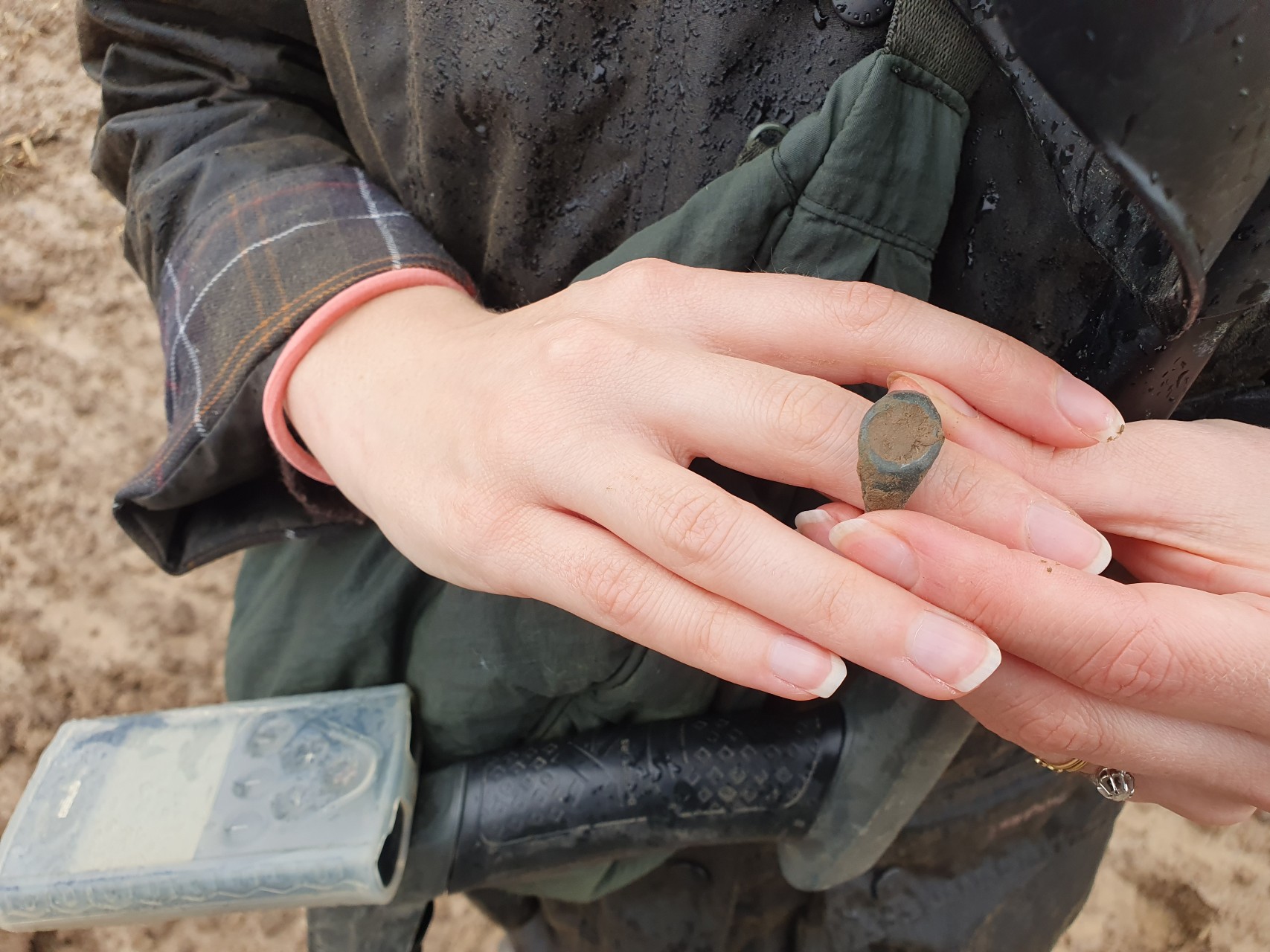
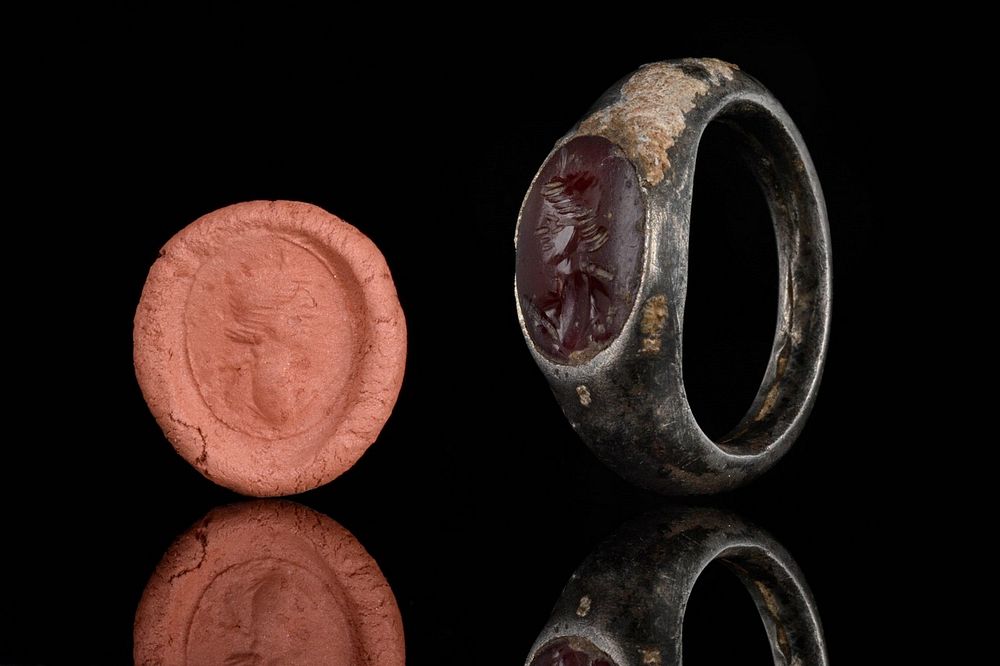
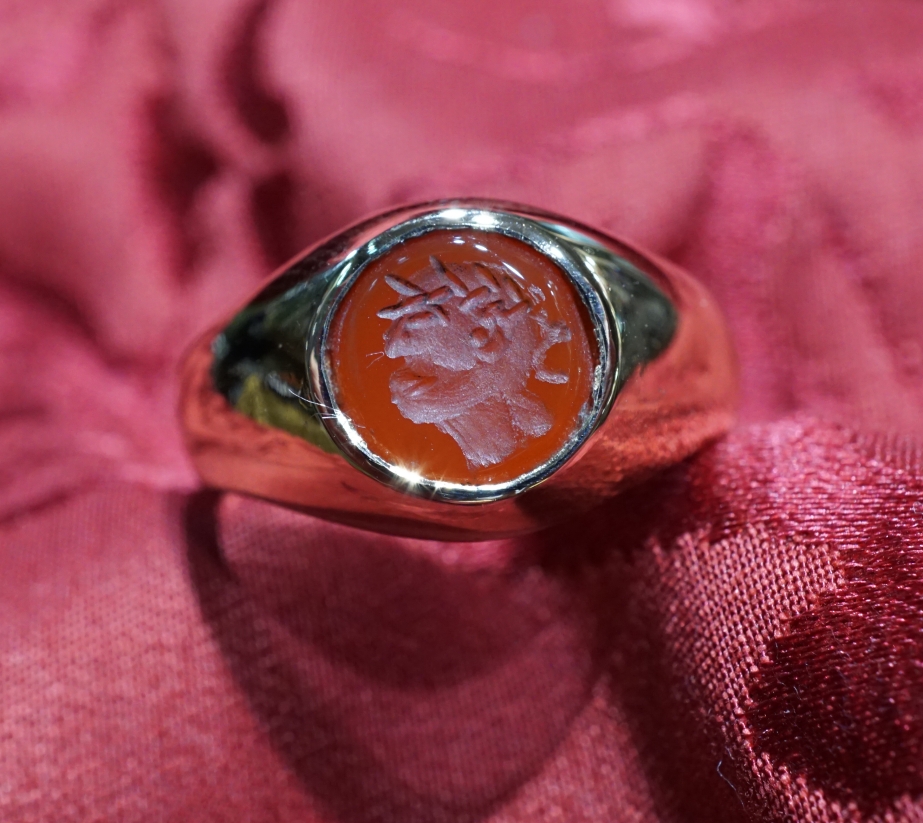
While wealthier Romans commissioned intaglios carved from gemstones such as carnelian, chalcedony, or amethyst, glass-paste versions offered a more affordable alternative. They imitated the look of gemstones by molding colored glass into relief designs, making them accessible to lower or middle-status individuals.
Roman glass-paste was made from a silica-based mixture combined with sodium, calcium, and mineral pigments, then melted at roughly 1300°C in a high-temperature furnace. The molten mixture had to be stirred continuously for as long as eighteen hours to achieve uniform color and clarity. Afterwards, it was slowly cooled in specialized furnaces known as tempre, allowing the temperature to return gradually to ambient levels to prevented thermal shock, which could otherwise cause the material to crack or shatter.
Common motifs on Roman intaglios included gods and goddesses, mythological heroes, animals, military symbols, and portraits. These designs often reflected personal beliefs or occupations. For example, depictions of Mars symbolized courage, while Mercury represented commerce and travel.
Copper-alloy rings like this were durable and inexpensive compared to silver or gold. However, their glass-paste intaglios are much more vulnerable to decay. Over centuries, exposure to moisture, soil acidity, and temperature changes can cause the glass to corrode. This happens because ancient glass has an unstable, amorphous structure that slowly reacts with water and minerals, leading to surface pitting, flaking, and discoloration.